Navigating the Early Days of Social Media and User Engagement in India
In the early days of social media in India, brands were just beginning to experiment with digital platforms as a means of engaging with their audiences. This case study covers three social media applications that I worked on during a time when smartphones were not widespread, and users accessed social media primarily through web browsers. The guidelines and rules for digital engagement were not yet established, creating a chaotic environment in which brands and designers were forced to innovate. I played a crucial role in designing and developing these applications, working without clear precedents and setting examples for others in the Indian market.
Introduction
In the early days of social media in India, brands were just beginning to experiment with digital platforms as a means of engaging with their audiences. This case study covers three social media applications that I worked on during a time when smartphones were not widespread, and users accessed social media primarily through web browsers. The guidelines and rules for digital engagement were not yet established, creating a chaotic environment in which brands and designers were forced to innovate. I played a crucial role in designing and developing these applications, working without clear precedents and setting examples for others in the Indian market.
The Projects
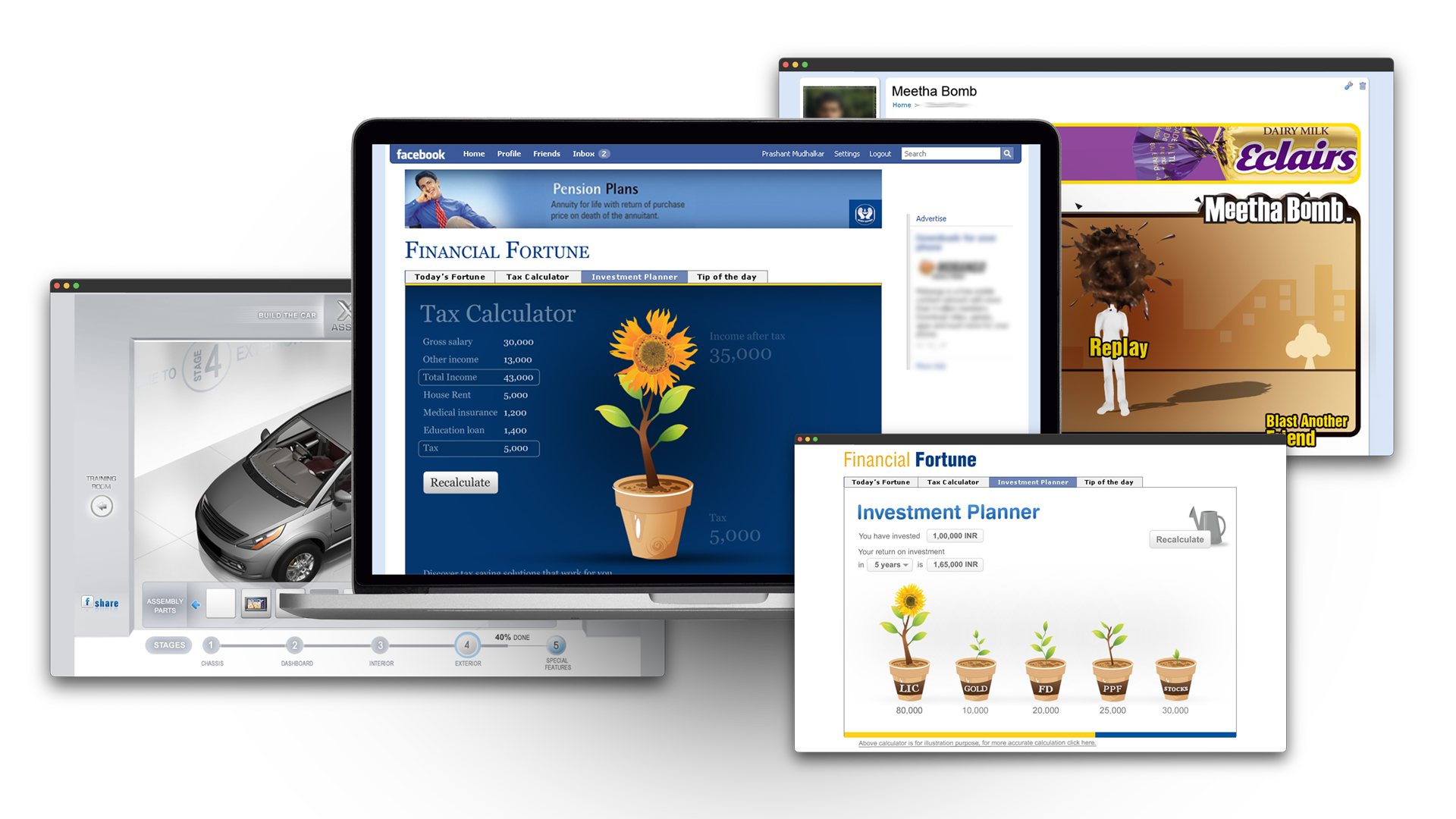
TATA Aria Car Launch – Social Media Engagement Application
The first project was developed to promote the launch of TATA Motors' new car, Aria, through an interactive social media contest. Users participated by guessing the car's features, learning about the vehicle’s benefits in the process. The goal was to create engagement and build excitement around the upcoming launch.
I created the information architecture that powered the application, working closely with graphic designers, UI designers, and 3D artists. Together, we built an engaging platform that showcased the car's features in an innovative way, making it easy for users to interact and engage with the brand.
LIC Financial Planning Tool – Social Media Application
The second project was an innovative financial planning tool built within a social media platform for the Life Insurance Corporation of India. The goal was to simplify tax-saving concepts through an interactive, gamified interface, with users interacting with a growing plant to explore their tax-saving potential.
I proposed the idea and led the design of the user workflow. By creating a fun, educational interaction, I helped make tax-saving concepts more accessible to users. This project was part of a broader initiative to explore user behavior on social media and how brands could leverage that to communicate their message.
Cadbury ‘Meetha Bomb’ – Social Media Application
Cadbury’s “Meetha Bomb” campaign aimed to reflect the joy of eating chocolate through an interactive social media app. Users could upload a friend's photo and simulate the "Meetha Bomb" experience, aligning with Cadbury’s TV campaign. This playful application gained significant attention and became one of the most discussed social media apps of the time.
I led the UX design, conceptualized the interaction model, and ensured that the app aligned with the brand’s campaign. This project demonstrated how digital platforms could amplify the reach of a traditional advertising campaign.
Design Process
Working on these projects required close collaboration with graphic and web designers, UI experts, and developers to ensure that the final products were not only visually appealing but also user-friendly. As a creative technologist, I ensured the smooth integration of design and development, constantly adapting to the technical challenges of working on social media platforms in their early stages.
In this chaotic, evolving landscape, we were among the first to explore social media integrations like OpenSocial, and we had to continuously innovate without established guidelines or industry standards. The ambiguity of the time meant we had to make decisions quickly, often setting examples for other brands that were just beginning to experiment with social media in India.
Goals
- Brand Awareness: Increase overall visibility and recall of the brand among social media users by creating engaging and shareable content.
- User Engagement: Boost the level of interaction with the target audience by encouraging participation in contests, games, and interactive features.
- Lead Generation: Drive qualified leads by integrating sign-up forms, quizzes, and other call-to-actions within the social media applications.
- User Retention: Increase the duration and frequency of user visits by creating continuous engagement through regular updates and new features.
- Social Media Shares & Virality: Encourage users to share their interactions and experiences with their networks, thereby amplifying the brand's reach.
Challenges
- Creating user journeys that were engaging and intuitive while aligning with brand messaging.
- Successfully bridging the gap between traditional advertising and digital platforms by creating interactive, user-driven experiences.
- Setting precedents for social media applications and engagement strategies that others in the industry would later follow.
- Leading the collaboration between design and development teams to ensure smooth and effective project delivery.
Users
The users for these applications were a mix of early social media adopters in India, engaging with digital platforms through web browsers, as well as specific target audiences:
- For TATA Aria, the primary users were car enthusiasts and potential buyers looking for innovative ways to interact with the brand.
- For LIC’s financial tool, users were financially-conscious individuals looking for easy-to-understand tax-saving options.
- For Cadbury, the target audience was a broad range of users who engaged with the playful and fun elements of the brand.
These users had particular needs. For example, TATA Aria’s users were curious about the car’s features, while LIC’s users needed a gamified experience to make financial planning less daunting. Understanding these diverse needs was key to designing meaningful interactions.
Learnings
Working in an environment where social media was still emerging as a platform for brand engagement taught me a lot about both design and technology. Collaborating with advertising experts and various creative teams helped me hone my ability to bridge the gap between brand objectives and user engagement.
Key learnings from these projects
- Working with sports enthusiasts, advertisers, and designers from different fields expanded my understanding of how different media can complement each other.
- The constant need to update and adjust live applications in response to user demands and new campaign strategies taught me how to work in fast-paced, dynamic environments.
- I gained valuable experience in integrating new content and features into a live environment without disrupting the user experience.
- This period greatly improved my understanding of working in social media environments, dealing with technical challenges, and keeping the user experience at the forefront.
Conclusion
These projects represent my work in the early, experimental phase of social media applications in India. By combining traditional advertising techniques with interactive digital design, we were able to create applications that engaged users, spread brand messages, and set new standards for social media engagement. These projects reflect my ability to work in ambiguous, evolving spaces and help define new ways for brands to connect with their audiences.