Designing Interactive Ad Products with Visual Standards and Creative Guidelines
In my role as a UX/UI Designer at a digital product incubator, I collaborated with India's leading publisher websites to create innovative interactive digital display ad products. This project involved executing several advertising campaigns to identify effective patterns through data analysis, which we then converted into marketable ad products. Throughout this process, I gained valuable insights into how internet ad products function and how visual design principles can enhance user engagement. My learning journey focused on understanding user behavior in the digital landscape.
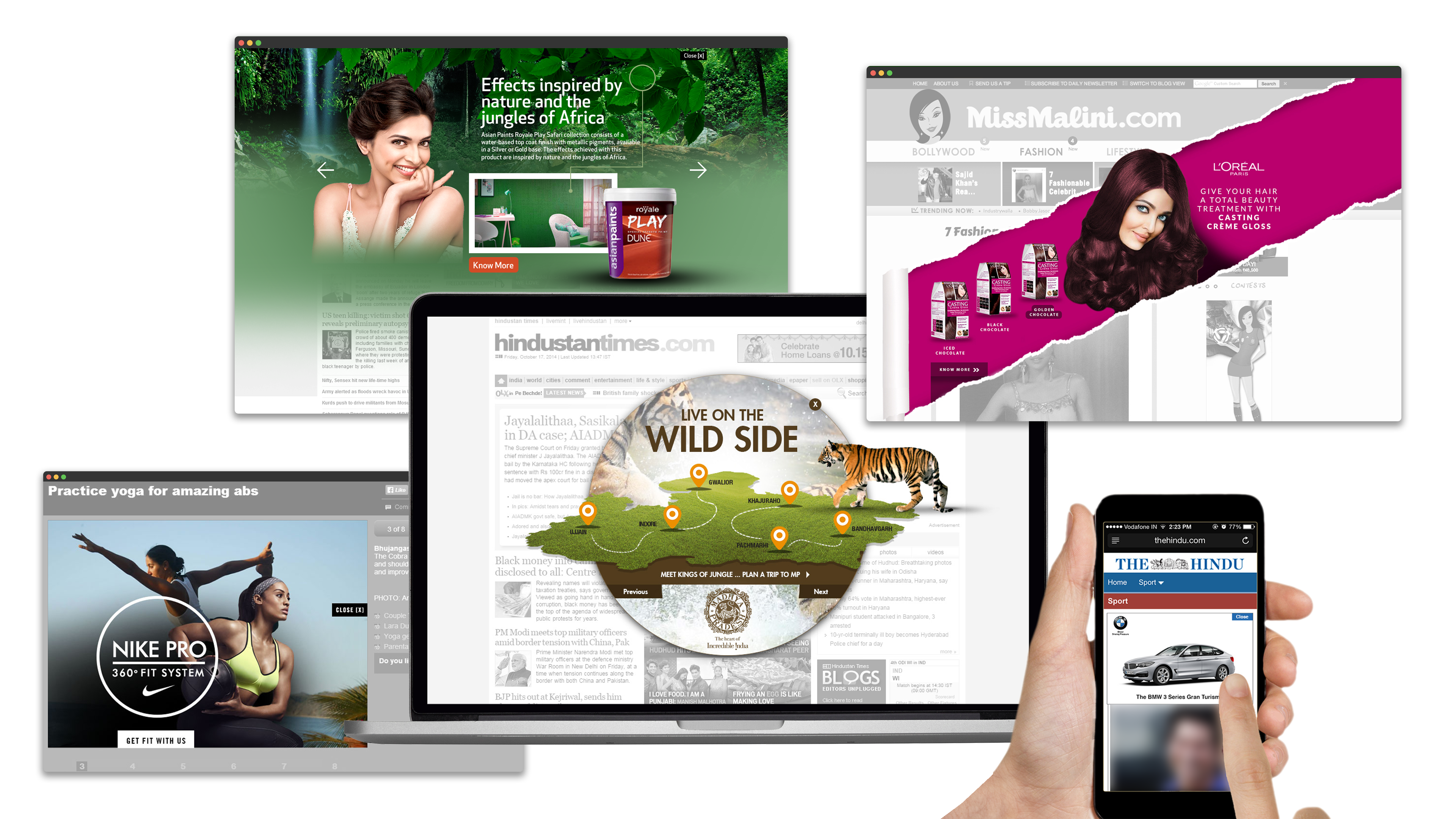
The Challenge
The realm of visual advertising is fraught with challenges
- Limited File Size: Advertisements must remain within strict file size limits to ensure quick loading times across various devices and internet connections. This constraint necessitates careful consideration of assets used in the ads.
- Universal Compatibility: Ad products need to function effectively across different devices, browsers, and screen sizes. This requires extensive testing to ensure a consistent user experience.
- Rapid Communication: Ads must convey their message quickly, often within a few seconds, to capture user attention and interest. Designing concise and impactful messaging is essential.
- Short Execution Time: The timeline for launching campaigns is typically short, requiring rapid design iterations and implementation. Efficient project management and agile development practices are crucial.
- Guideline Creation: I was tasked with developing comprehensive guidelines for visual designers and production teams to ensure consistent execution of ad campaigns. Additionally, I created content guidelines for sales managers to assist in pitching and selling these campaigns to brands.
- User Engagement: Ensuring that the ads are not only visually appealing but also engaging is a major challenge. The design must encourage users to interact without overwhelming them with information.
- Data-Driven Design: The need to incorporate data insights into the design process requires constant analysis and adjustments based on user behavior metrics. Balancing creativity with analytical feedback is crucial to achieving optimal results.
Design Process
- Research and Data Analysis: We began the project by executing a series of campaigns to gather data on user engagement and interaction with different ad formats. This phase was crucial for identifying successful patterns that would inform our product design.
- Pattern Identification: After analyzing the data, we pinpointed specific elements that resonated with users, such as interactive features and dynamic content. This information guided the conceptualization of our ad products.
- Guideline Development: My role included creating detailed design guidelines for visual designers and production teams. These guidelines covered aspects such as file size optimization, interactive elements, and user engagement strategies. I also developed content guidelines for sales managers to help them effectively communicate the value of our ad products to potential clients.
- Prototyping and Testing: With guidelines in place, we proceeded to create prototypes of the ad products. We conducted user testing sessions to evaluate the effectiveness of our designs, ensuring they met both usability and engagement criteria.
- Iterative Refinement: Based on feedback from user testing, we iterated on our designs to enhance functionality and appeal. This iterative process was vital for achieving the balance between creativity and performance that our clients desired.
- Final Execution: Once the prototypes were finalized and approved, we moved into production, working closely with visual designers and technical teams to ensure that the ads were executed flawlessly.
- Post-Launch Analysis: After launching the ad products, we monitored their performance through analytics tools. This ongoing evaluation allowed us to refine future ad designs and adapt strategies based on real-time data.
Reflection
This project provided a significant learning opportunity, enhancing my understanding of digital advertising products and the behaviors of internet users. By leveraging visual design principles and data analysis, we successfully created interactive ad solutions that resonate with audiences and drive results for our clients.