Shaping the Content Commerce Experience: UX Design for Multi-Format Shopping on Amazon India
The Content Commerce initiative on Amazon India aims to deliver a new shopping experience, allowing customers to discover trends, gain inspiration, and make confident purchase decisions through curated, engaging, and highly visual content. Recognizing that today’s customers seek inspiration and recommendations from diverse sources—such as influencers, brands, and peers—this experience was designed to integrate multi-format content, including videos, images, and articles. The project prioritizes long-term engagement over immediate sales, trusting that this approach will foster lasting customer loyalty and maximize long-term value.
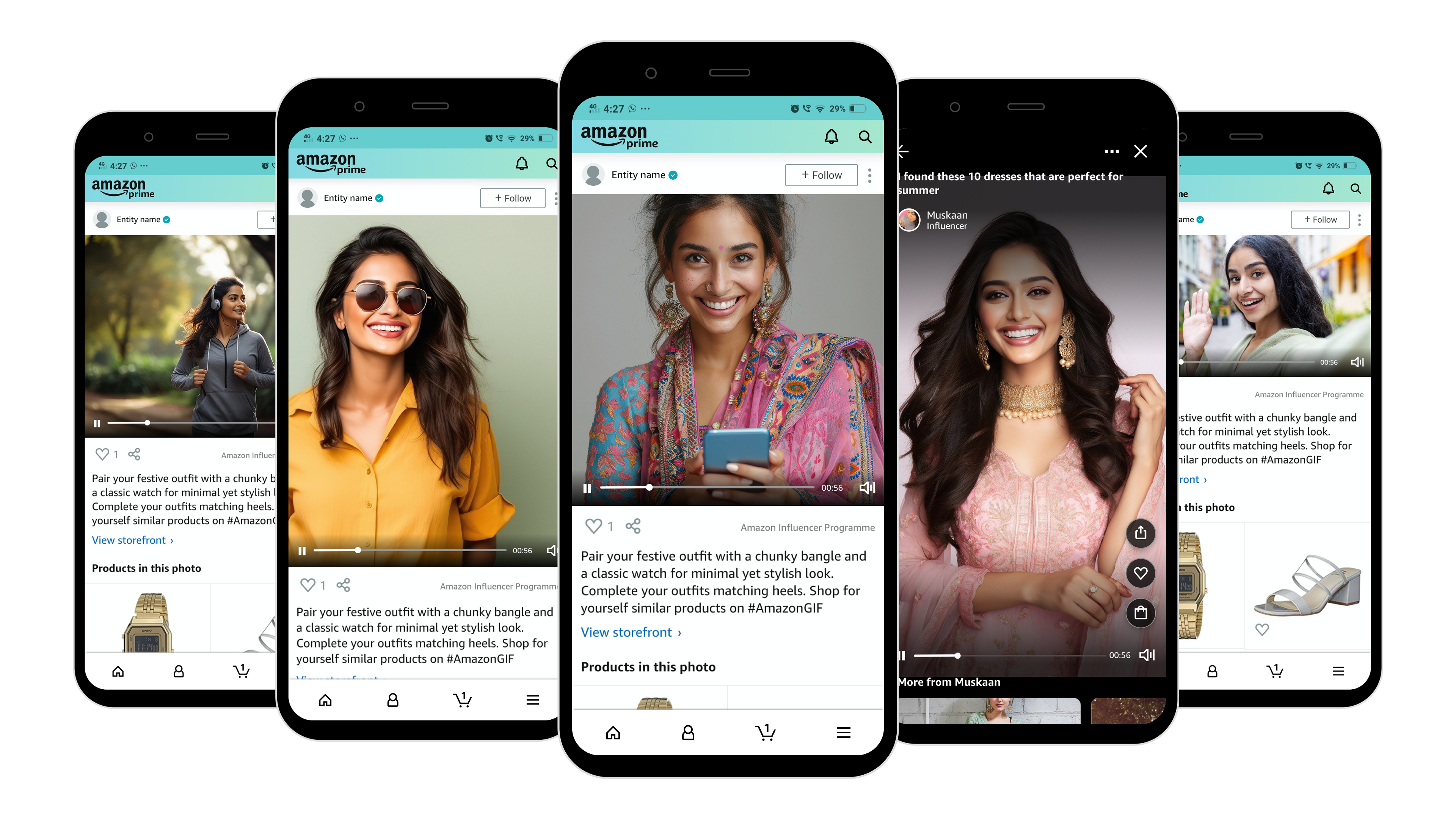
Before the launch of Content Commerce, customers often turned to other social platforms for shopping inspiration, but this process was fragmented and cumbersome. Amazon’s in-app content commerce experience provided a unified solution, where users could trust the content, find updated prices, and discover products effortlessly within the Amazon ecosystem.
Design Goals
- Create an Immersive, Seamless Experience: Provide a space where customers can move smoothly between content types without leaving the Amazon app, keeping them engaged throughout the browsing and discovery journey.
- Empower Content Creators: Support influencers, brands, and customers by offering intuitive tools and policies that make content creation rewarding and valuable to customers.
- Optimize for Discovery, Not Just Purchase: Focus on encouraging recreational shopping experiences, where customers can explore, get inspired, and save ideas for later.
UX Tenets
- Engagement-Centric Design: We design for repeat engagement and aim to provide a "window-shopping" feel, believing it will lead to long-term customer satisfaction.
- Prioritizing Content Quality: Only high-quality and relevant content is surfaced to ensure that customers find content they trust and relate to.
- Customer-First Approach: While we support contributors in building an audience, our primary goal is to enhance the customer experience.
- Seamless Shopping Funnel Integration: Customers can navigate easily between discovery, research, and purchase without unnecessary barriers.
- Inclusive Representation: Content reflects diversity across creators and topics, enabling more customers to see themselves in the experience.
- Visual-Driven Inspiration: Across content formats—whether videos, images, or text-based guides—the design ensures a visually engaging experience that captures customers' attention.
Content Commerce—A Multi-Format Approach
Amazon needed a content solution that could engage users at every stage of their shopping journey, from discovering trends to evaluating high-consideration purchases. We developed a variety of content formats to achieve this, each designed to fulfill a specific user need, such as exploring “Shop the Look” collections, browsing influencer and brand images, or reading in-depth buying guides.
Key Content Types in Content Commerce
- Shop the Look: “Shop the Look” featured shoppable content in various formats, such as photos, idealists, and video stories. Customers could explore curated looks from influencers and brands and shop individual items directly. These experiences combined video, image, and text, making it easy for users to navigate between inspiration and purchasing.[Screenshot 1 Caption: “Shop the Look” feature with shoppable content across photos, idealists, and videos, allowing customers to explore curated looks and shop seamlessly.]
- Buying Guides: For products that require more detailed consideration, such as furniture and appliances, buying guides offered structured, easy-to-digest information on key features like size, maintenance, and price comparisons. These guides were presented as both articles and videos, accommodating diverse user preferences.
- Product Reviews and Comparisons: Product reviews included both text and video formats, providing a thorough analysis of product features and helping customers evaluate options before purchasing. This format supported customers in making informed decisions, especially when comparing similar products.
- Influencer and Brand Content: Influencers and brands shared visually engaging photos, text-based posts, and videos that highlighted product usage, styling ideas, and more. These multi-format posts added authenticity and personalization to the shopping experience, helping customers connect with products in a meaningful way.
Design projects
- Designing a Multi-Format Content Layout: I collaborated with stakeholders to create a layout that could showcase all content types—images, videos, and text—in an easily navigable format. This ensured that users could view a mix of media, like shoppable photos and video stories, directly within the feed, encouraging exploration across different content styles.
- Navigation and Integration Across Content Types: To create a unified shopping experience, I worked with the development team to integrate content modules across key app sections, such as product detail pages and search results. This allowed users to discover “Shop the Look” posts, reviews, and buying guides seamlessly across their journey.
- Guidelines for Content Quality and Consistency: We established standards for content presentation, focusing on creating a visually appealing and informative interface that maintained consistency across different media formats. Influencers and brands were guided to create high-quality, engaging content that blended inspiration with functionality.
Results
The launch of the multi-format Content Commerce program led to a measurable increase in engagement and enhanced the user journey:
- Increased Time Spent on Content: Customers spent longer sessions engaging with multi-format content, including browsing shoppable looks and reading guides. This diversity in media made content exploration enjoyable and encouraged return visits.
- Higher Content Interaction: The flexible design that supported images, videos, and text allowed customers to interact with the content type they preferred, whether it was viewing an influencer video, reading a product review, or exploring curated looks.
- Improved Customer Trust: By focusing on quality and relevance, Amazon India’s Content Commerce became a trusted source for shopping inspiration and information.
Video Engagement as a Key Component
While videos were a core part of Content Commerce, our research also showed a growing trend toward video as a primary medium for inspiration, especially in India’s mobile-first market. To capitalize on this preference, we integrated video content strategically, while ensuring a balance with image and text content to cater to varying user needs.
Why Multi-Format Content Matters in Video-Driven Experiences
- Engagement and Exploration: Customers found that videos offered a dynamic and relatable way to explore products, while images and text complemented the video content with additional details and context.
- Support for Diverse User Preferences: While video had high engagement, we maintained a balance with other media, as some users preferred quick information through images or text rather than video.
- Marketplace-Specific Content Strategy: To resonate with user preferences, we curated content in categories like Fashion, Beauty, and Food, ensuring a combination of images, videos, and articles that appealed to broad interests.
Design projects
- Enhanced Video UX with Multi-Format Support: I designed a video feed that integrated alongside images and text, providing users with a cohesive experience where they could interact with various media types. Videos auto-played on mute as users scrolled, encouraging initial engagement, while users could explore deeper by tapping to enter full-screen mode.
- Personalized Content Ranking: We implemented a content-ranking algorithm that prioritized fresh content, high-engagement posts, and a diverse mix of media formats. This helped ensure that users encountered a variety of engaging, quality content with each visit.
- Custom Content Guidelines for Influencers and Brands: I collaborated with the content team to develop UX guidelines that promoted high-quality, engaging content in video, image, and text formats. Influencers were encouraged to create portrait-mode videos optimized for mobile, while maintaining a diverse mix of shorter videos, long-form guides, and quick tips in image or text format.
Results
- Balanced Engagement Across Content Types: By creating a multi-format content experience, we saw high engagement not just in videos but across images and text posts as well. This balanced approach helped us reach a wider audience and allowed users to explore products in their preferred format.
- Longer Engagement Sessions: Users engaged with multi-format content for longer periods, as the mixed-media approach allowed them to quickly access information and explore deeper when interested.
- Scalable Framework for Future Content: By establishing guidelines and patterns for images, videos, and text, we created a scalable framework that allowed us to expand Content Commerce into new categories, like Gadgets and Home Décor, while maintaining high quality and relevance.
Reflection
Designing Amazon India’s Content Commerce program was a deeply educational experience, showcasing the value of multi-format content in an evolving digital landscape. By combining video, images, and text into a unified content discovery experience, we made it easy for users to interact with inspiration and information in the way that best suited their needs.
Personal Insight: This project reinforced the importance of a flexible, user-first approach to content design. While video engagement was critical, the balanced use of images and text allowed us to create a richer, more holistic experience that served diverse preferences, ultimately bringing Amazon closer to becoming a comprehensive inspiration destination.